
How Much Money Do You Need to Buy a Multifamily Property?
You need more than the down payment. The cash to buy a multifamily property is the down payment plus closing costs, immediate repairs and reserves, and a workable planning range is 30% to 40% of the purchase price. In the model below, a $1,000,000 building takes $380,000, not the $250,000 a 25% down payment suggests.
The number that matters is cash required, not down payment
Most first-time multifamily buyers open with one question: what is the down payment? It is the wrong question, because the down payment is the smallest surprise in the deal. The real question is how much cash has to be in the deal on closing day, and how much has to stay in the bank for the twelve months after it.
Think of it as two numbers. Cash to close is what you wire to get the keys. Cash to survive is what keeps the building performing while it stabilizes, a unit turns, or a boiler fails in January. A buyer who funds the first and not the second has bought a problem with a mortgage on it.
The cash stack: five buckets
This is an illustrative model, not one of my deals. A hypothetical $1,000,000 purchase, built so you can see how the buckets stack. Replace every figure with your own market's numbers.
| Bucket | Assumption | Cash required |
|---|---|---|
| Down payment | 25% of price | $250,000 |
| Closing costs | 3% of price | $30,000 |
| Immediate repairs and CapEx | 5% of price | $50,000 |
| Reserves | 5% of price | $50,000 |
| Total cash required | $380,000, or 38% of price |
Percentages vary by market, lender, building condition and deal. The 30% to 40% range above comes from this model, not from an industry statistic.
Down payment
This is set by the loan, and the loan is set by the lender. Lenders size a multifamily loan at the lower of a loan-to-value limit and what the property's income will support. Smaller two-to-four unit buildings that you will live in can carry materially lower down payments than larger investor purchases, so confirm the current programs with a lender rather than planning from a number you read somewhere.
Closing costs
Lender fees, title, appraisal, legal, inspections and prepaid items add up fast. Three percent is a planning number, not a quote.
Immediate repairs and CapEx
Almost every building you can afford has deferred maintenance: roofs, boilers, electrical panels, and vacant units that need turning before they can rent. If you do not budget this at closing, you will fund it out of reserves, and then you have no reserves.
Reserves
This is the bucket beginners skip, and it is the one that separates a hiccup from a forced sale. Many lenders require proof of liquidity at closing, and the requirement varies by lender and program. Whatever the lender asks for is a floor. The operator's number is the one that survives a bad quarter.
Carry during stabilization
If the building has vacancy or needs renovation before it performs, the loan payment, taxes, insurance and utilities keep running while the income does not. In a value-add deal this can be the largest bucket of all. The model above assumes a building that already performs. Add carry if yours does not, and be honest about when the income actually starts, which is the point of when a value-add property is actually stabilized.
What lenders actually look at
Lenders do not lend against your enthusiasm. They lend against the property's income. The test is debt service coverage: net operating income divided by annual debt service. If the property cannot clear the coverage the lender requires, the loan gets smaller, and a smaller loan means more of your own cash at closing.
This is why the same $1,000,000 price can require different cash on two buildings. Strong, verified rents support more debt; soft rents, high expenses or poor records support less. Both start with the income number, which is why rebuilding the seller's NOI from scratch is the first thing you do, and What Is DSCR, and Why 1.2 Is the Line covers the coverage test itself. When rates are elevated, the coverage test usually limits the loan before the loan-to-value limit does, and the gap comes out of your pocket. We covered buying into that market in how to buy multifamily when interest rates are high.
A real example: what came back, and what the bank held
I operate 125 doors across Tampa Bay, FL and Northeast Pennsylvania, and across more than 200 transactions the pattern holds: the cash you put in is not the same as the cash that comes out.
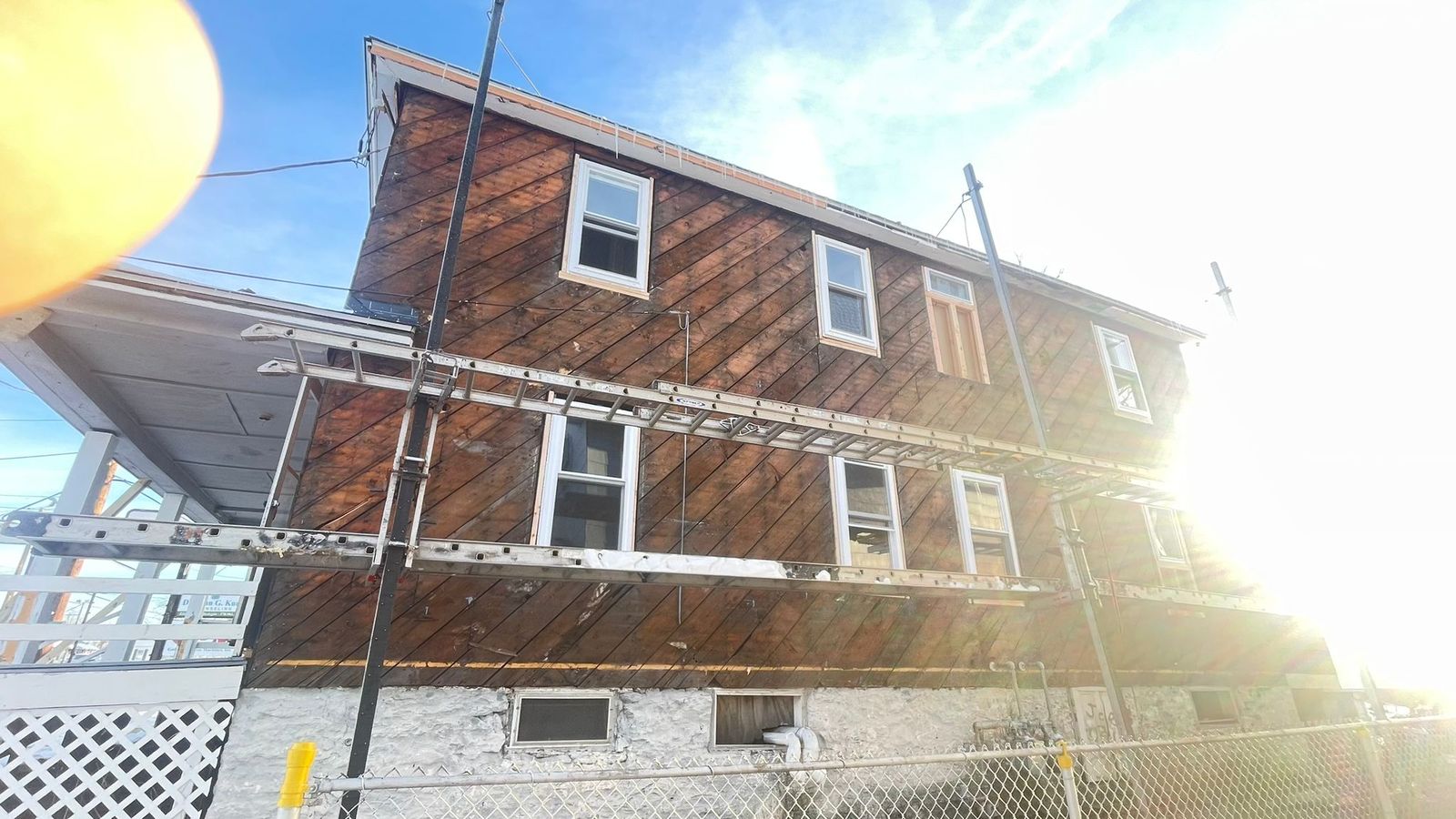
Take a six-unit building in Old Forge, Pennsylvania. We purchased it in 2025 for $335,000 and invested about $95,000, for an all-in cost of $430,000. None of that was my own cash. It was proceeds from a 1031 exchange on a single-family property I sold, plus private capital. Six months later the building appraised at $850,000 and we refinanced with a $535,000 loan.
Now read the numbers the way a lender did. The loan came in roughly $105,000 above our all-in basis, and at about 63% of the appraised value. The bank held back from a full 75% loan-to-value because the value had been created so quickly that they were not comfortable with the seasoning. They wanted equity left in the deal, and about $315,000 of it stayed in the building.
That deal went well and still did not hand the capital back on demand. That matters more when the money is not yours. Private capital has a clock on it, and repaying it through a refinance depends on an appraisal and a lender's seasoning rules, neither of which you control. Why appraised value and what a lender will actually fund can diverge is covered in an appraisal is an opinion, the market gives the verdict, and the same mechanic drives the refinance step in does the BRRRR strategy still work in 2026.
The lesson is not that refinancing returns your money. It is the opposite. Underwrite the cash you need as if you will not get it back on the schedule you hoped. Whatever comes back is a bonus, not a plan.
How operators reduce the cash they need without adding risk
There are legitimate ways to lower the cash you need at closing, and there are ways that just move the risk somewhere you cannot see it. The difference is whether the structure is backed by the property's income and your reserves.
- Buy the right size. A smaller building, or one you can live in, can need far less cash than a 12-unit. Starting smaller is a capital decision, not a lack of ambition.
- Negotiate repairs into the deal. Repair credits and price reductions lower what you fund at closing. A seller who will not fix a roof may agree to a credit.
- Buy better. Equity created at purchase costs less to hold than equity borrowed against later. What the number has to clear is in what a good cap rate actually is.
- Use creative structures where they fit. Seller financing, mortgage assumption, repair allowances, options to purchase and bridge capital can all reduce the cash needed at closing, and each carries risk that has to be underwritten. Our Skilled Property Finders page covers these structures and why a complicated deal is often the opportunity.
- Phase the work. Do not renovate everything on day one if the building performs with a smaller first phase. Match the spend to the income it creates.
None of these removes the need for reserves. Cutting cash at closing by also cutting reserves is how a manageable deal becomes a distressed one. On the debt side, Elite Private Lending arranges fix & flip, bridge and DSCR rental loans on 1 to 10 unit properties through a lending partner. ESCG is not a direct lender, and terms depend on the property and the borrower.
Where first-time buyers get the number wrong
- They count only the down payment. The other three or four buckets arrive on closing day anyway.
- They assume the refinance fixes it. A refinance depends on the appraisal, the lender's seasoning rules and the income the building actually produces. Old Forge is a lender leaving equity in a deal that went well.
- They underwrite the best case. Run it with rents lower than plan, vacancy higher and expenses up. If it only works in the best case, it does not work.
- They spend reserves on the renovation. Reserves are for the unplanned. If they are funding the plan, you have no reserves.
Build your number before you shop
- Pick a purchase price range, not a single price.
- Get real down payment and closing cost figures for each end of that range from an actual lender.
- Walk the building and price the immediate repairs. Add a contingency.
- Set reserves from the building's monthly operating costs and debt service, not a round number.
- Add carry if the building does not yet perform.
- Add it up. That is your number. If you are short, change the deal, not the math.
Frequently asked questions
How much down payment do I need for a multifamily property?
It depends on the loan and the building. Investor loans on larger multifamily commonly require a meaningful share of the price, while owner-occupied two-to-four unit financing can be considerably lower, so get current terms from a lender rather than a rule of thumb. Either way the down payment is only one of four or five cash buckets, so plan for closing costs, repairs and reserves on top of it.
Can you buy multifamily with no money down?
Some structures, such as seller financing or a seller credit, can reduce or occasionally eliminate the cash you bring to closing, but no money down rarely means no cash. You still face closing costs, repairs and reserves, and a deal funded entirely with someone else's capital carries repayment pressure you have to underwrite. Treat it as a structure to evaluate, not a shortcut.
How much should I keep in reserves after buying an apartment building?
Set reserves from the building's actual monthly costs, including debt service, taxes, insurance, utilities and maintenance, and from how much vacancy and repair risk it carries. A lender may impose a minimum, but treat that as a floor rather than a target. If one failed boiler or two extra vacancies would put you in trouble, your reserves are too thin.
Does the money come back when you refinance?
Sometimes, partly, and later than you planned. A refinance depends on the appraisal, the lender's loan-to-value limit and its seasoning rules. On our Old Forge building the appraisal came in at $850,000 and the loan at $535,000, about 63% of value, because the equity had been created quickly. Roughly $315,000 stayed in the deal.
