
DSCR vs. Commercial vs. Bridge Loans: Which One Fits Your Deal?
Pick the loan by the property and your plan, not by the name or the rate. In short: a DSCR rental loan is for a rent-ready property that pays for itself, a commercial-property loan is for a building the bank sizes on its income and your strength, and a bridge loan is short-term money to buy or fix a property until you sell or refinance. The right one depends on the property’s condition, its income, your plan, and your exit. Programs differ a lot, so always read the actual terms.
Three loans, three jobs
Most investor financing comes down to three tools. They do different jobs.
- A DSCR rental loan is long-term money for a rental that is already rent-ready. It qualifies mostly on the property’s rent.
- A commercial-property loan is money for a building the bank underwrites on how it operates and on how strong you are as a borrower. It is common on larger or less standard properties.
- A bridge loan is short-term money to buy, fix, or carry a property that is not ready for permanent financing yet.
One honest note up front: these categories overlap. A DSCR rental loan is usually a business-purpose loan, and traditional commercial lenders also look at whether the income covers the debt. So “DSCR” and “commercial” are not two clean, separate boxes. When we say DSCR loan here, we mean the investor rental product that qualifies mainly on the property’s rent. When we say commercial loan, we mean a bank loan underwritten on the building’s operations and the sponsor. The point is not the label. The point is matching the loan to the deal.
A side-by-side look
Here is the general shape of each. Individual programs vary, so treat this as a map, not a rulebook.
| DSCR rental loan | Commercial-property loan | Bridge loan | |
|---|---|---|---|
| Best for | Rent-ready rentals | Larger or non-standard buildings | Buying or fixing a property |
| Condition expected | Rent-ready | Usually stabilized | Can be rough or vacant |
| What the lender looks at | The property’s rent, your credit, down payment, reserves | The building’s income and expenses, plus your strength | The deal, the plan, and the exit |
| Paid off over (amortization) | Often long-term | Often long-term | Usually interest-only |
| When it’s due (maturity) | Long-term | Often sooner than it’s paid off | Short (months to a couple of years) |
| Rate | Fixed or adjustable | Fixed or adjustable | Usually higher, short-term |
| Exit | Hold and rent | Hold and rent | Sell or refinance |
Notice the two most confused rows: “paid off over” and “when it’s due.” They are not the same thing. More on that below.
DSCR rental loans, in plain terms
A DSCR loan asks one main question: does the rent cover the loan payment? If the property pays for itself at the lender’s required margin, it can qualify, even without using your pay stubs or tax returns. We explain that math in what DSCR is and the 1.2 rule lenders use.
But “no personal-income check” does not mean “no check on you.” A DSCR lender still looks at your credit, your down payment or equity, and the cash you have in reserve after closing. How many units it allows, and whether the payment is interest-only or pays down the balance, change from program to program. Ask.
If you want to run your own numbers, Elite Private Lending arranges fix-and-flip, bridge, and DSCR rental loans on 1 to 10 unit properties through a lending partner, and that page has a DSCR calculator you can use. ESCG is not a direct lender, and the terms depend on the property and the borrower.
Commercial-property loans, in plain terms
A commercial loan looks at two things: how the building operates, and how strong you are. The building side is its income minus its real expenses. The borrower side is your experience, your net worth, and your cash on hand. Build the real income number the way we do in what NOI is and why the seller’s number is usually wrong, because the bank will.
Here is the part that trips people up. The schedule your payment is built on and the date the loan is actually due are two different things. A commercial loan might be paid off over 25 or 30 years, but come due in 5, 7, or 10. That does not mean every commercial loan has a balloon at year five. Some do, some do not. Read which one you have. Whether you personally guarantee the loan (recourse) also varies.
Bridge loans, in plain terms
A bridge loan is short-term money for a property that is not ready for a permanent loan. You use it to buy, to renovate, or to carry a building until it is stabilized. It usually costs more and is interest-only, and it is due soon.
The whole plan rests on one thing: a believable exit. You either sell or refinance before the bridge comes due. So watch three things: the monthly carrying cost, the due date, and whether an extension is a right you have in writing or just something the lender might allow. If the exit is a refinance, size it before you borrow. We walk through that in how to plan a refinance when rates are rising, and what a stalled sale does to a refinance in your flip won’t sell? check your DSCR refinance.
The big one: does a five-year loan reset, or does the whole balance come due?
This is the question that confuses almost everyone. The fix is to see that a loan has three separate clocks.
- The rate-reset clock. On an adjustable loan, this is when the interest rate can change. The rate moves according to your contract. A reset changes your payment. It does not, by itself, make the whole balance due.
- The amortization clock. This is the schedule your payment is built on, say 30 years. It sets how big the payment is.
- The maturity clock. This is the date the remaining balance is actually due. If there is still a balance that day, you pay it off, usually by refinancing or selling. That is a balloon.
A loan can have more than one of these. So when someone says “it’s a five-year loan,” it could mean the rate resets at year five, the balance is due at year five, or both. You cannot tell from the phrase. You have to read which clock the five years is on.
Three simple made-up examples:
- Loan A: paid off over 30 years, rate fixed for 5 years then adjusts, due in 30. At year five, your rate can change. Nothing comes due.
- Loan B: paid off over 25 years, due in 5. The payment is small because it is stretched over 25 years, but the remaining balance is due at year five. That is a balloon.
- Loan C: rate adjusts at year five, and the balance is due at year ten. Two different clocks, both real.
Same phrase, three very different loans. Ask which one you are signing.
Which fits, by scenario
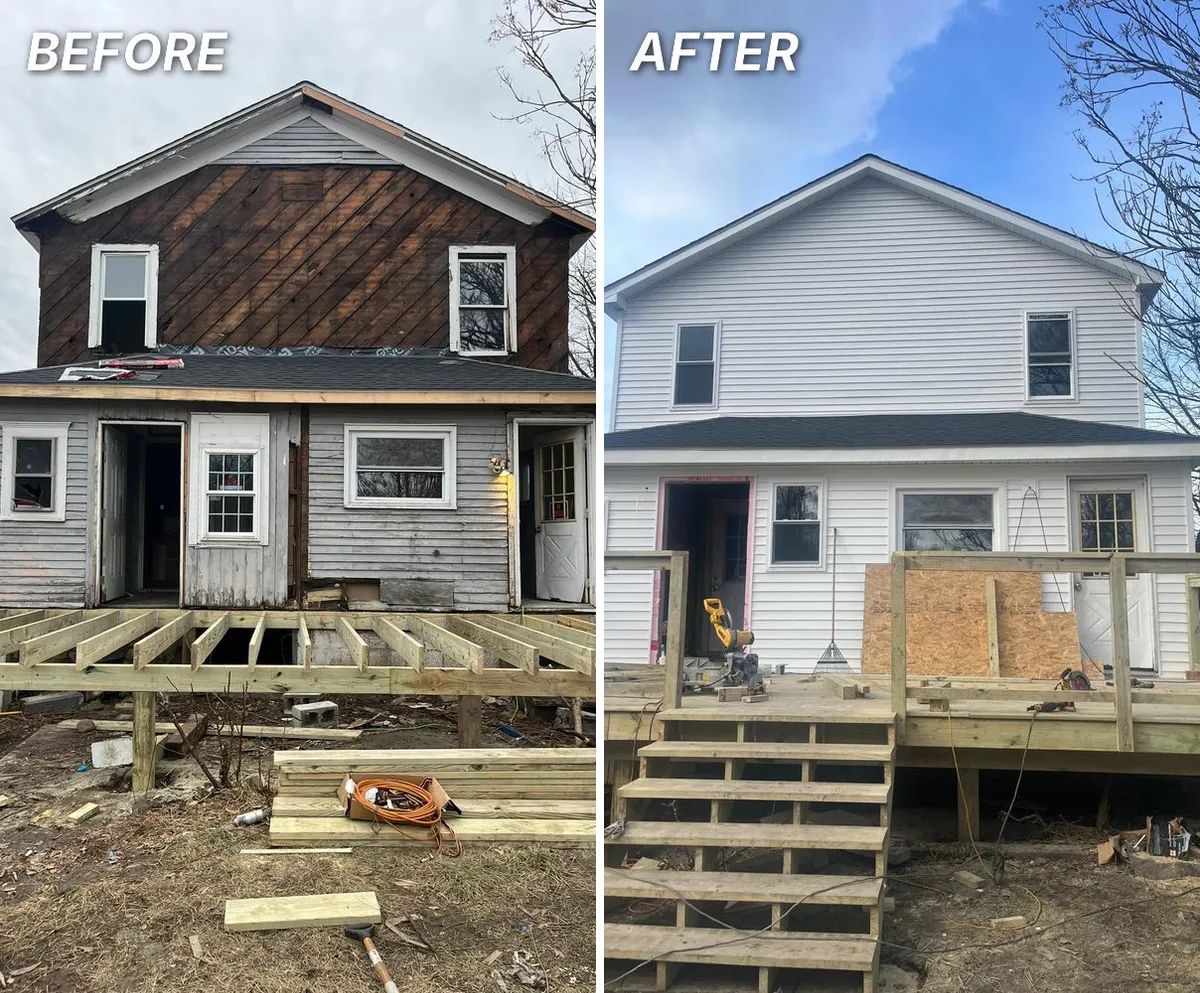
- A property that needs real work. Often a bridge loan to buy and renovate, then a DSCR or commercial loan once it is rent-ready and stabilized, if you qualify. A finished renovation is not a working rental until it is leased and collecting.
- A rent-ready rental you plan to hold. Usually a DSCR rental loan.
- A larger multifamily you are buying on its numbers. Usually a commercial-property loan.
Nothing here is a promise that a refinance will be there when you need it. That is exactly why you line up the exit before you borrow, not after.
Questions to ask any lender before you sign
- When is the remaining balance due?
- When can the rate change, and how is the new rate set?
- What schedule is my payment based on?
- If there is a balloon, what has to be true for me to refinance or sell by then?
- Is an extension a right I have in writing, or your choice?
- What is the prepayment penalty?
- Do I have to personally guarantee the loan?
- What reserves do you require after closing?
If a lender cannot answer these plainly, that is your answer.
The loan follows the deal
Pick the property and the plan first. Then pick the loan that fits them. An investor who starts with “what’s your rate?” is asking the third question first. Start with the building, its income, and your exit. The right structure falls out of those.
Frequently asked questions
Is a DSCR loan the same as a commercial loan?
They overlap. A DSCR rental loan is a business-purpose investment loan that qualifies mainly on the property’s rent, usually for rent-ready properties up to a small number of units. A traditional commercial-property loan is underwritten on the building’s operations and your strength as a borrower, often for larger or less standard properties. Commercial lenders also use debt-service coverage, so the line is not clean. Ask the lender which product you are actually getting.
Does a five-year loan mean a balloon payment?
Not always. “Five years” can mean the rate resets at year five, the balance is due at year five, or both. A rate reset changes your interest rate and your payment, but it does not by itself make the whole balance due. A maturity date does. Ask two separate questions: when is the balance due, and when can the rate change.
What loan do I use to buy a property that needs renovation?
Often a bridge loan to buy and fix it, then a DSCR or commercial loan once it is rent-ready and stabilized, if you qualify at that point. The plan only works with a believable exit, so size the refinance or the sale before you take the bridge, not after. Watch the carrying cost and the due date closely.
Sources
CFPB, “What is a balloon payment? When is one allowed?”; Fannie Mae Multifamily, DUS mortgage loans.
