
The Operator Standard BRRRR
Does the BRRRR Strategy Still Work in 2026?

In this post
Yes, BRRRR still works in 2026 — but the version that worked in 2021 is dead. BRRRR stands for Buy, Rehab, Rent, Refinance, Repeat: renovate an under-performing property, stabilize it, refinance at its new value, and recycle your capital into the next deal. When money was cheap and prices only went up, the market bailed out sloppy execution. Today, with higher rates and tighter lending, the strategy still produces equity — but only for investors who create the spread through execution instead of waiting for appreciation to hand it to them.
Why everyone is asking this question
I understand why people think BRRRR is dead. Rates are higher than the entire last cycle of BRRRR content was written for. Refinance proceeds are lower for the same NOI. Lenders are stricter on debt coverage. And I have said publicly, on my own podcast, that housing is in a recession — not because of headlines, but because of what the volume, affordability, and demand data actually show.
So let me be direct about what that means, because most people draw the wrong conclusion from it.
A housing recession does not suspend the mechanics of BRRRR. Buy, rehab, rent, refinance, repeat still works exactly the way it always has. What the market took away is the subsidy. From roughly 2012 to 2022, appreciation and falling rates covered for bad budgets, slow lease-ups, and lazy stabilization. You could execute at 60% and the market would carry the other 40%. That market is gone. The strategy is not.
I have been investing for 20 years across 200+ transactions, and I operate 125 doors today in two markets: Tampa, Florida and Northeast Pennsylvania. I have run this playbook in cheap-money years and expensive-money years. The difference is not whether it works. The difference is who it works for.
What BRRRR actually is — a 60-second refresher
You buy below what the asset can be worth once it is performing. You rehab to raise the income it can produce. You rent to prove that income with leases and collections. You refinance into long-term debt at the new value, pulling your capital back out. You repeat with the recovered capital.
The leverage is not the renovation. It is the velocity of your capital — how fast the same dollars come out of one asset and go to work in the next. That is also why the strategy punishes slow execution: every month the money is trapped in a property that is not yet refinanceable is a month it is not working anywhere.
And here is the part that decides everything in 2026: the refinance is underwritten against the stabilized asset. Not the renovated one. Not the occupied one. The one that is collecting, controlled, and producing NOI a lender can verify. BRRRR is won or lost in the gap between the last day of construction and the day the lender funds.
Proof from this market: Vine Street, Scranton, PA
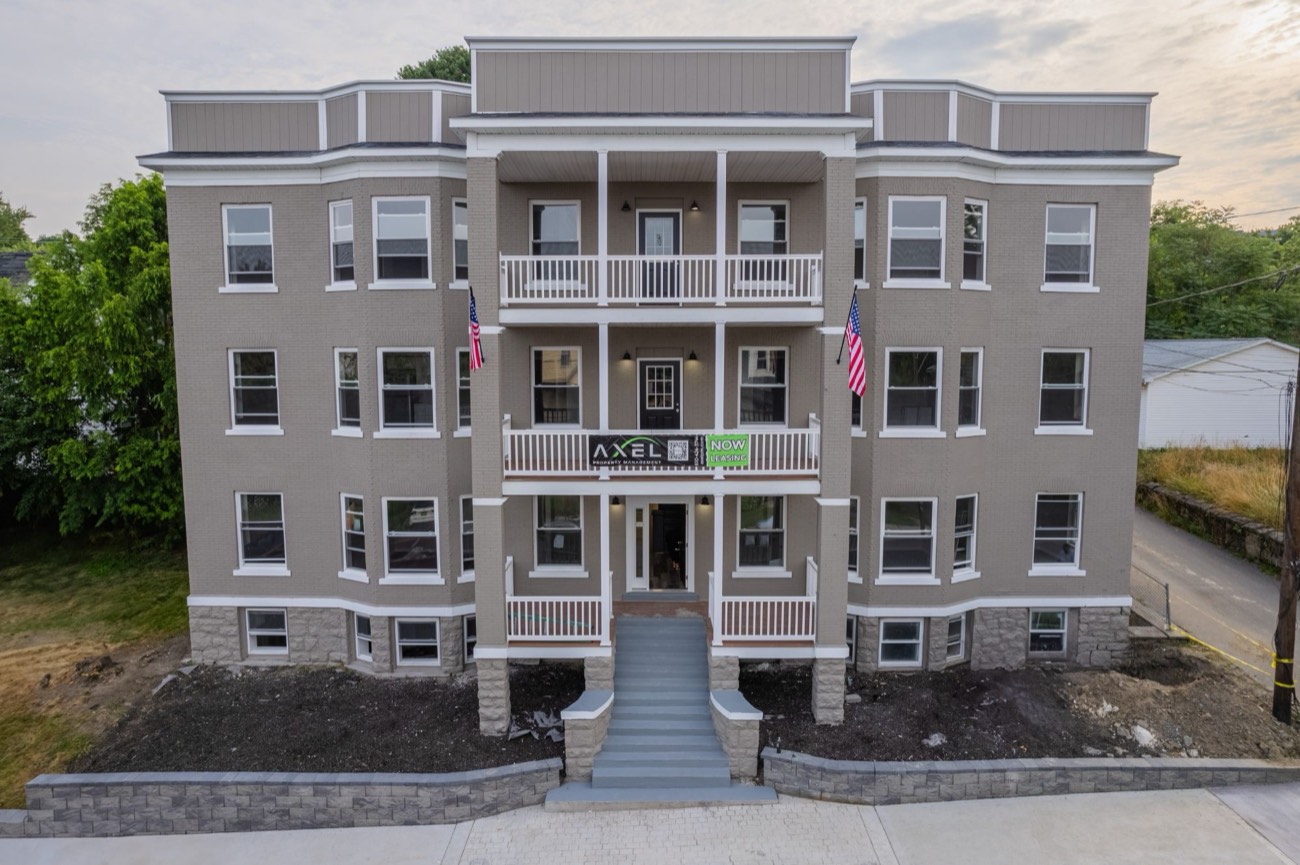
I do not have to argue this in theory. Vine Street is a 12-unit multifamily asset in Scranton, Pennsylvania, and it was executed in this rate environment, not the old one.
The numbers: we bought it for $280,000 — a price that included an $80,000 wholesale fee. We put $840,000 into the renovation. Total basis: $1.12 million. Post-stabilization, the property appraised at $2.3 million. That is over $1,170,000 in equity created in a market everyone says is too hard for this strategy.
The Vine Street ledger
12-unit multifamily · Scranton, Pennsylvania
- Purchase (includes an $80,000 wholesale fee)
- $280K
- Renovation
- $840K
- Total basis
- $1.12M
- Appraised after stabilization
- $2.3M
- Equity created
- $1.17M+
100% occupancy reached in July, for the first time in four years. Figures verified by Martin Perdomo.
Figures describe specific past transactions by Skilled Property Finders and are shown for illustration. Past results do not guarantee future results. Nothing here is an offer to sell or a solicitation to buy any security.
Read those numbers again against what “the market” did for us: nothing. There was no appreciation wave. The spread was created — by buying against what the asset could produce, capitalizing a real redevelopment (the rehab was three times the purchase price), and then doing the unglamorous work of stabilization.
Because that last part is where the deal was actually decided. The property could look occupied on paper and still not be stable — collection issues, unit issues, management drift. The reports coming from management did not tell the full story, and the asset needed a deeper review than the reports alone provided. So we stopped treating occupancy as the finish line and started measuring stability: occupancy, collections, expense control, tenant quality, reporting discipline, and predictable cash flow.
This July, Vine Street hit 100% occupancy for the first time in four years. Not from a hot leasing market — from installing a system: weekly tracking of collections, vacancies, turns, delinquency, leasing activity, and expense variance, and verifying management reports against direct audits. Reports are not reality. Verification is reality.
That market is gone. The strategy is not.
The $1.17M+ did not appear the day the renovation finished. It appeared when an appraiser could underwrite a stabilized asset. That is BRRRR working in 2026.
The full Vine Street case studyOn the ESCG home page.What changed in 2026 — and what it demands from you
Three things are genuinely different from the years most BRRRR content was written in, and each one raises the execution standard.
Higher rates mean lower refinance proceeds. The same NOI supports less debt than it used to. That kills deals that were counting on the refinance to return 100% of capital on optimistic numbers. The answer is not hoping for cuts — I do not run my portfolio on rate hope. The answer is underwriting the refinance at today’s terms, and treating any improvement as margin, not plan.
Lenders underwrite stability, not stories. Tighter debt coverage requirements mean trailing collections and operating history matter more than they did when everyone was lending against a rising tide. The investors who track their assets weekly and can hand a lender clean, verified numbers get financed. The ones managing by vibes do not.
The wrong debt is more dangerous than ever. High-interest bridge debt turns ordinary construction, inspection, and leasing delays into liquidity stress, and delays are normal, not exceptions. Use bridge capital only when the timeline, reserves, exit, and contingency can absorb slippage. Where a local bank offers construction-to-permanent financing, take that conversation seriously — it removes a hard maturity from your schedule and matches the debt to the business plan. Debt should support execution, not punish delay.
The four failure points that kill BRRRR deals now
Speed without sequence. Demo, paint, and finishes are the visible schedule. Permits, inspections, utilities, and occupancy are the invisible schedule. If the invisible schedule falls behind, visible progress is an illusion. Measure progress by the critical path to revenue, not by how busy the site looks.
Thin liquidity. BRRRR gets sold as a low-capital strategy. In 2026 it is not. Liquidity is a survival tool, not a luxury — a major redevelopment should be capitalized to survive six to twelve months without cash flow. If a two-month delay puts you in crisis, the deal was under-capitalized on day one.
Optimistic lease-up assumptions. Do not underwrite as if every unit leases within three months of construction ending. Plan for a six-to-twelve-month stabilization window. Underwriting a fast lease-up is how investors get trapped in short-term debt they cannot exit.
Delegating verification. Execution can be delegated. Verification cannot be delegated to the same person doing the work. Tie contractor payments to verified completion, require lien releases as you pay, and never let one party be the only source of truth on status.
The 2026 stress test
Before you buy, do not ask how much you make if everything goes right. Ask what happens when it does not:
- Rents come in 5% below plan.
- Vacancy reaches 10%.
- Expenses rise 10%.
- The renovation costs 20% more.
- Stabilization takes six months longer.
- The refinance rate is higher, or proceeds come in lower than expected.
Then ask the only question that matters: does the property merely make less money, or does the deal break? An operator does not need perfect predictions. An operator needs enough margin, liquidity, and control to survive being wrong. In 2021 you could skip this test and get away with it. In 2026 this test is the strategy.
So: should you run BRRRR in 2026?
If you have the liquidity to absorb delay, the discipline to verify instead of trust, and the systems to stabilize an asset after the construction ends — yes. This market is actually better for disciplined operators than the cheap-money years were, because the tourists are gone and the sellers who are still transacting are motivated.
If you are counting on the refinance to rescue an under-capitalized project, no. And if you already own rental property, do not add a BRRRR until you know what your existing portfolio is producing. Establish control of what you own first. The operating sequence is construction, lease-up, stabilization, optimization, and durable financing — and the market no longer forgives skipped steps. That was always the difference between a landlord and an operator. 2026 just made it visible.
Frequently asked questions
Is BRRRR dead in 2026?
No. The mechanics — buy, rehab, rent, refinance, repeat — work the same as ever. What died is the market subsidy: appreciation and cheap refinancing no longer cover for weak budgets and slow stabilization. The strategy now only pays investors who create the equity spread through execution.
How is BRRRR different with today’s interest rates?
Higher rates mean the same NOI supports less refinance debt, so proceeds are lower and more of your capital may stay in the deal. Underwrite the refinance at today’s terms, not hoped-for cuts, and make sure the deal survives lower-than-expected proceeds before you buy.
How long does a BRRRR deal take in 2026?
Plan for the renovation plus a six-to-twelve-month stabilization window before the refinance, especially while utilities, inspections, and leasing are still in motion. Lenders are underwriting trailing collections and operating history, so the clock runs until the asset is provably stable — not until construction ends.
Start with the 30-Day Operator Reset.
Subscribe to Landlord to Operator and get the 30-Day Operator Reset free.
Get the 30-Day Operator Reset
Martin Perdomo
20 years investing, 200+ transactions, and 125 doors operated today in Tampa, FL and Northeast Pennsylvania.